The Book of Habakkuk
Habakkuk is unusual among the Old Testament prophets: instead of preaching to the people, he argues directly with God, demanding to know why injustice in Judah goes unanswered. Written around 605-598 BC across three short chapters, the book records God's startling reply that Babylon will be His instrument of judgment, and the prophet's struggle to accept it. Start reading from Habakkuk chapter 1.
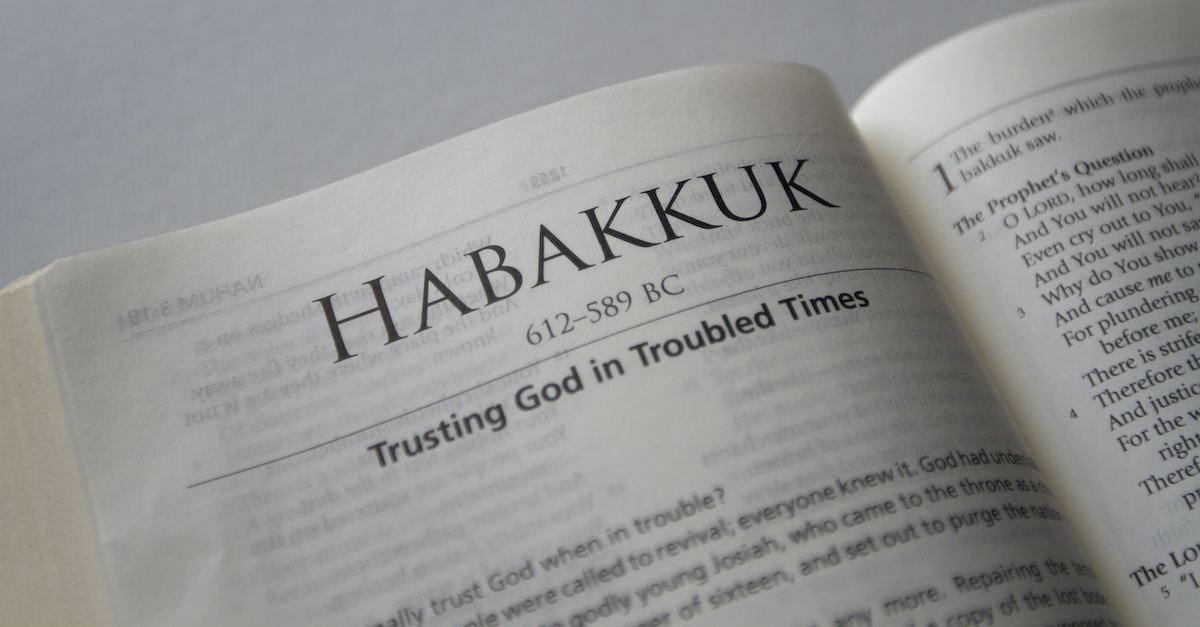
About Habakkuk
Habakkuk is the thirty-fifth book of the Bible and the eighth Minor Prophet, written around 605-598 BC and spanning 3 chapters. Habakkuk is unique among the prophets in that it is structured as a dialogue between the prophet and God -- a wrestling match of honest questions and divine answers. Habakkuk first cries out to God asking why He tolerates Judah's rampant injustice without acting. God answers that He is raising up the Babylonians as His instrument of discipline. Habakkuk recoils in theological shock -- how can a holy God use a nation more wicked than Judah to punish His own people? God's second answer points to the certain downfall of Babylon and the ultimate triumph of His purposes, and calls Habakkuk to patient, trusting faith. The book concludes with one of scripture's greatest prayers of trust. Major themes include wrestling honestly with God in prayer, the problem of theodicy (God's justice in a suffering world), faith as the foundation of the righteous life, and God's sovereign use of even evil human powers to accomplish His purposes. Key verses include Habakkuk 2:4 -- The righteous person will live by his faithfulness -- quoted three times in the New Testament -- and Habakkuk 3:17-18 -- Though the fig tree does not bud...yet I will rejoice in the Lord, I will be joyful in God my Savior. Habakkuk KJV Bible reading models courageous faith through uncertainty. Read the Book of Habakkuk online here in full.
Frequently Asked Questions
Who wrote Habakkuk, and when?
What makes Habakkuk different from the other prophetic books?
What does Habakkuk 2:4 mean, and why does it matter?
Why was Habakkuk troubled by God's answer to his complaint?
How does Habakkuk end?
Today's Verse
Or as a hidden untimely birth I had not been, As infants that never saw light.
Verse Of The DayThe book turns on Habakkuk 2:4 - "the just shall live by his faith" - a verse Paul later built entire arguments around in Romans and Galatians. It closes with a psalm of trust sung even when the harvest fails, a fitting companion to the laments of Jeremiah and the visions of Ezekiel that follow it in the prophetic books.