The Book of Ecclesiastes
Ecclesiastes records the Teacher's unflinching search for meaning through wisdom, pleasure, achievement, and wealth, only to find each empty when pursued apart from God. Across 12 chapters it names life's brevity honestly before arriving at a settled conclusion about reverence and purpose. Start at Ecclesiastes chapter 1.
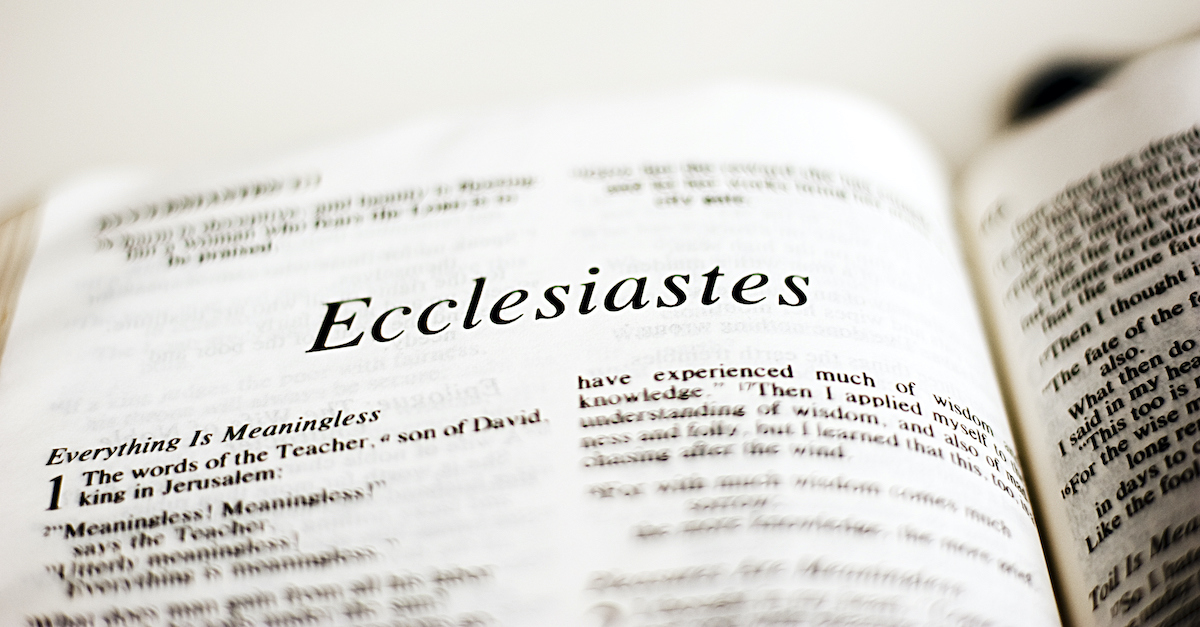
About Ecclesiastes
Ecclesiastes is the twenty-first book of the Bible, attributed to the Teacher -- widely identified as King Solomon -- written around 935 BC and spanning 12 chapters. It is one of the most philosophically challenging books in all of scripture, consisting of a sustained and honest inquiry into the meaning of life under the sun. The Teacher exhaustively pursues meaning through wisdom, pleasure, work, wealth, and achievement, only to repeatedly conclude -- Vanity of vanities, all is vanity -- when divorced from God. Yet this is not nihilism: the book arrives at a positive conclusion that life, properly received as gift from God and lived in reverence before Him, is good and meaningful. Major themes include the limits of human wisdom, the brevity of life, the sovereignty of God over all human striving, the importance of fearing God and keeping His commandments, and the proper enjoyment of God's good gifts. Key chapters include Ecclesiastes 1 (the opening declaration of vanity), Ecclesiastes 3 (to everything there is a season), and Ecclesiastes 12 (the conclusion of the whole matter). Famous verses include Ecclesiastes 3:1 -- There is a time for everything, and a season for every activity under the heavens -- and Ecclesiastes 12:13 -- Fear God and keep his commandments, for this is the duty of all mankind. Ecclesiastes KJV Bible study rewards patient, reflective reading. Read the Book of Ecclesiastes online here in full.
Frequently Asked Questions
Who wrote Ecclesiastes?
What is the central question Ecclesiastes wrestles with?
Does Ecclesiastes end in despair?
What is a well-known verse from Ecclesiastes?
How does Ecclesiastes compare to the Bible's other wisdom books?
Today's Verse
For as long as the son of Jesse liveth upon the ground, thou shalt not be established, nor thy kingdom. Wherefore now send and fetch him unto me, for he shall surely die.
Verse Of The DayThe book's famous refrain, "vanity of vanities," gives way to a final charge to fear God and keep His commandments. Read alongside other Old Testament wisdom writing such as Psalms and Song of Solomon, Ecclesiastes still speaks directly to modern questions about purpose and materialism.